What the Snap Pixel Sends From a Website, Hashed Email Field Included
Snapchat’s pixel loads scevent.min.js from sc-static.net and posts its events to tr.snapchat.com, mostly /p. It’s common on shops that advertise to younger buyers, and like the other ad pixels it counts conversions and feeds audiences.
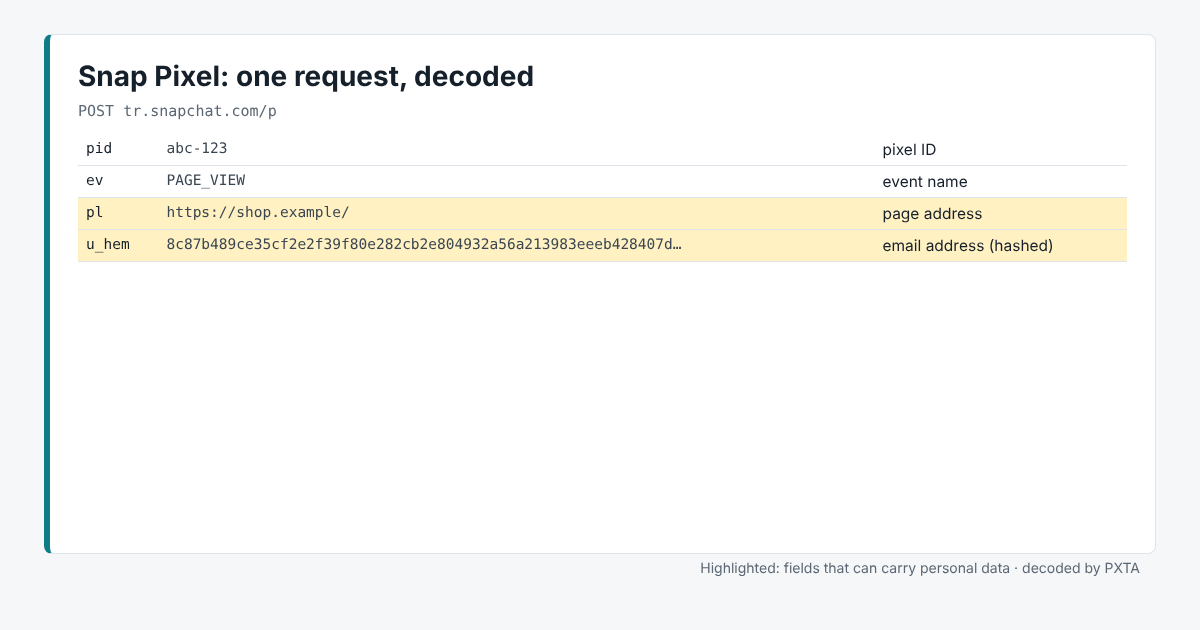
The request is a short form post. Four or five fields cover the event, the page, and, when it’s set up, the visitor’s hashed email.
The Fields That Matter
pidis the pixel ID andevthe event, such asPAGE_VIEW,ADD_CARTorPURCHASE.plis the page address andrfthe referring page.u_hemis a hashed email andu_hpna hashed phone number.
Where It Usually Goes Wrong
A hashed email on every page. Once a site passes the visitor’s email to the pixel, for example after login, u_hem can go out with every page view, not only with purchases. PXTA counts each page where it appears.
The page address. As with every pixel here, pl sends whatever the address holds, query string included.
Consent. The Snap Pixel has no built-in link to cookie banners. It waits only if the site or tag manager makes it wait.
What PXTA Can’t See
Snap’s Conversions API sends events from a site’s server, which a browser audit can’t observe. The same caveat holds for every ad network here: the browser report is half the picture when a site uses both.