What the Microsoft Advertising UET Tag Sends, Page Titles Included
Microsoft’s Universal Event Tracking tag, UET for short, is the conversion and remarketing tag for Microsoft Advertising, the ad network behind Bing search ads. It loads bat.js from bat.bing.com and sends its events to bat.bing.com/action/.
It gets less attention than the Meta Pixel, and it often sends more than people expect: its page load events usually carry the page address and the page title.
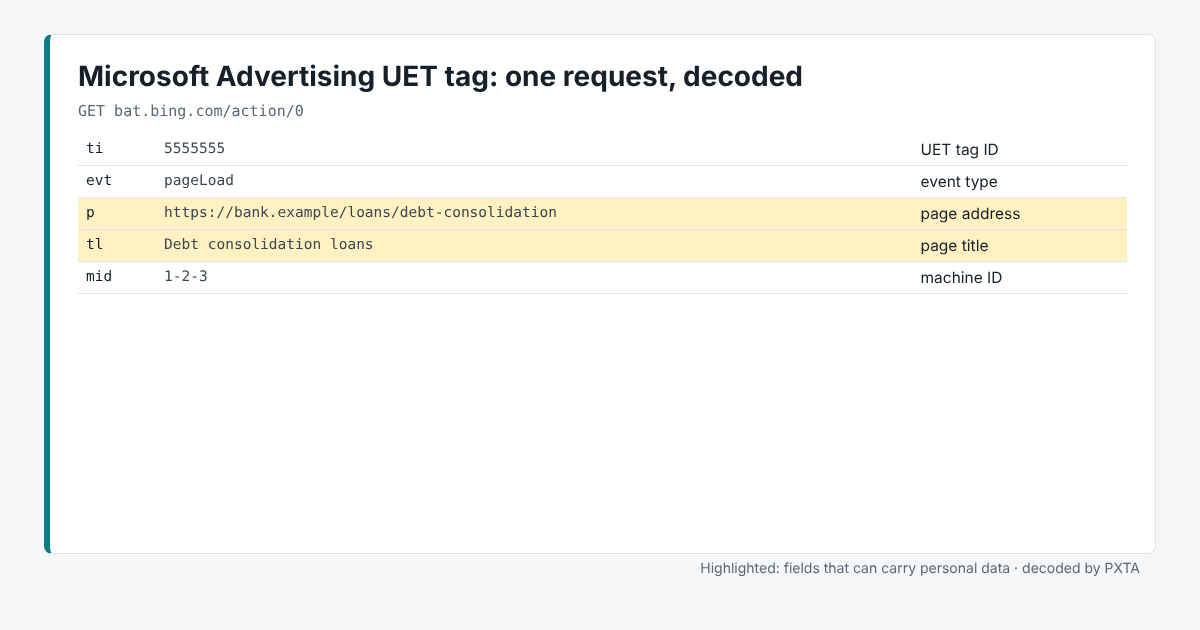
The Fields That Matter
tiis the UET tag ID, andevtthe event type, such aspageLoadorcustom.eais a custom event action.pis the page address,rthe referring page, andtlthe page title.mid,vidandsidare machine, visitor and session IDs.emandphcarry a hashed email and phone number for enhanced conversions.
Where It Usually Goes Wrong
Page titles. A title can say more than an address. /loans/dc-2 means nothing to a reader, while “Debt consolidation loans” is plain. PXTA checks titles as well as addresses for health, money trouble, checkout and account words.
Search ads, search pages. Sites that buy search ads often have busy site search too, and the search page’s address goes out in p. In the Marlow Home Loans sample, UET sent a search for “bankruptcy” after the visitor rejected tracking.
Enhanced conversions. Like Google’s version, Microsoft’s enhanced conversions hash customer details on the conversion page. PXTA matches hashes against addresses it knows.
What PXTA Can’t See
Conversions uploaded to Microsoft Advertising from a site’s own systems, or sent server to server, never pass through the browser.